
Last night, I walked Rufus the dog over to neighbor Teresa’s house. I handed over a pair of white linen pants I didn’t think I’d wear again, pants she thought she might use for a Halloween costume.
Before we walked down the steps of her front porch, she yelled out, Wait, wait! and ran inside. Upon returning, she handed me a loaf of homemade sourdough bread, because just as thrifting (white linen pants) is something I’m good at doing, baking homemade bread is something she’s good at doing.
Ours is a friendship of bestowing, in that “every act of bestowing contains elements of giving and receiving that create possibility for what comes next.”1 Because Teresa is also my neighbor, however, ours is like borrowing a cup of sugar from your neighbor and then taking it to the next level.
Really, I think this is what we are supposed to be to one another — humans being humans to one another, seeing and filling one another’s needs, mutually investing in each other’s lives because we can.
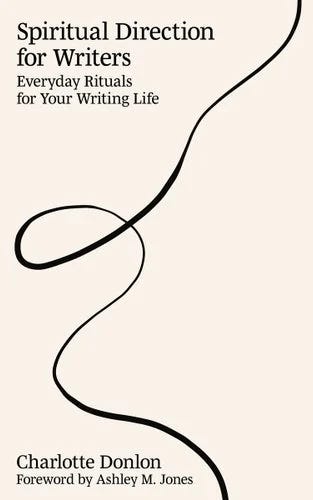
In her latest book, Spiritual Direction for Writers, Charlotte Donlon talks about the greater good of writing. “It’s about being a part of something bigger, contributing what we can to the common good, entering conversations that have been taking place for hundreds and thousands of years, and knowing that the words we write will benefit readers directly and people in our immediate circles indirectly,”2 she writes, and I don’t think it’s all that different from being part of something bigger in the little slice of a neighborhood I call home.
I loved, like loved, loved, loved, Charlotte’s book and can’t wait to offer an entire chapter to you. Yes, it directly benefits those of us who call ourselves writers, but perhaps as the aforementioned illustration also goes, I think the benefits extend beyond the writerly type as well.
Enjoy—
C.

From Spiritual Direction for Writers:
Contemplation prepares us for action. When we have an enhanced sense of belonging and have put ourselves in the way of practices, rhythms, and rituals that help us become more of who we were made to be, we will be better prepared to behold with wonder various things that cross our paths. We will be quicker to bestow good things on ourselves and others. And we will be more able to act, in ways large and small, for the common good.
Rebecca Solnit tells a powerful story about how a single act of bestowing transformed her writing life. A friend gave her a Victorian writing desk—“a dainty piece of furniture” with “four narrow drawers” and “various kinds of ornamentation.” This desk, which Solnit still uses today, has carried “millions of words: more than twenty books, reviews, essays, love letters,” and countless emails. But the story of how she received it reveals the profound impact of bestowing. A year before giving Solnit the desk, this friend had survived a horrific assault by an ex-boyfriend who tried to silence her. The friend had received the desk as payment from a single mother who was being evicted and then passed it on to Solnit. “Someone tried to silence her,” Solnit writes. “Then she gave me a platform for my voice.” This act of bestowing became the foundation for all of Solnit’s future work—literally and metaphorically.[1]
Sometimes our bestowing flows from creative abundance and a strong literary spirit, like Kaveh Akbar’s free monthly Zoom gatherings[2] and Jami Attenberg’s rallying writers to write one thousand words a day for two weeks, providing inspiration and encouragement through daily emails to all who participate.[3] But our actions don’t need to be connected to writing. They can be small, ordinary displays of charity. Volunteer for a local arts nonprofit. Take your nephew to the zoo. Skip takeout for two weeks and donate the money saved to the Red Cross. Read books to kindergarteners at your neighborhood’s elementary school.
In the grand scheme of things, our writing is not all about us. It’s about being a part of something bigger, contributing what we can to the common good, entering conversations that have been taking place for hundreds and thousands of years, and knowing that the words we write will benefit readers directly and people in our immediate circles indirectly. What actions will help you know you are a part of something larger than yourself? What will benefit your full self and the greater common good? Your actions toward these ends may need to be more contemplative for now. Maybe you need to take a nap, or take a quiet walk, or undertake some other action that will help you embrace different actions tomorrow or next week. Or, perhaps this week, or this day, is when you have the space and the desire to act more directly for the good of your surrounding community: bake a casserole for your local church’s breakfast ministry; take your friend’s three kids to the park so that she can finish her sonnet; write your congressperson.
Every act of bestowing contains elements of giving and receiving that create possibility for what comes next. If you aren’t sure what actions you want to take, enter the cycle through contemplation. And just as contemplation prepares us for action, action points us toward more contemplation. If you are coming out of a season of intense work or writing, perhaps you need a long stretch of rest and remembering. Return to the examen practice described in an earlier chapter and take a few minutes to review the past week or so. Check in with where you are right now. Which turn of the cycle are you winding around? Don’t force anything. Let the process unfold naturally as you notice what’s stirring in your gut, head, and heart. Trust that each small act of bestowing through words, presence, or practical support contributes to the spiral of creativity and connection that sustains us all.
It’s Cara again. Support Charlotte’s work by connecting with her here on Substack. Better yet, given today’s content, pick up a copy of Spiritual Direction for Writers at Bookshop, Amazon, or wherever you like to buy your books.
[1] Rebecca Solnit, Recollections of My Nonexistence: A Memoir (Viking, 2020), 43.
[2] These monthly online gatherings were hosted by https://www.portlandalano.org/.
[3] Read about Attenberg’s 1000 Words of Summer practice in her book 1000 Words: A Writer’s Guide to Staying Creative, Focused, and Productive All Year Round (Simon Element, 2024).
Spiritual Direction for Writers
Spiritual Direction for Writers
This book is such a gift!!!
Thanks, Cara! I appreciate you sharing all of this!